
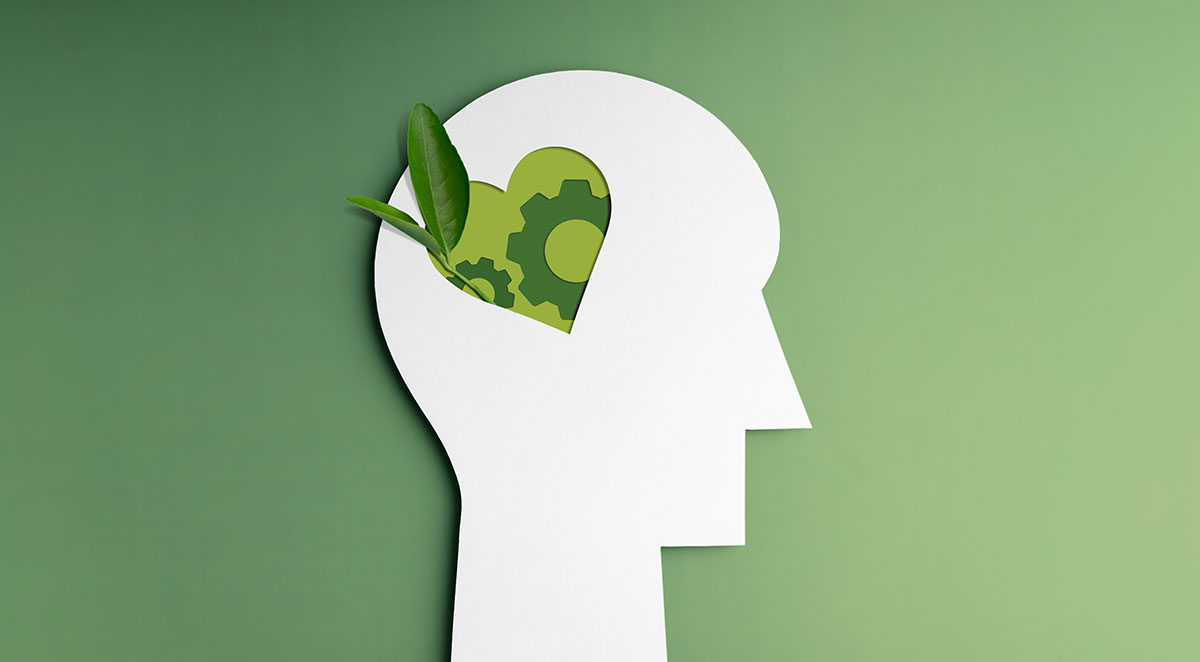
We track our carbon footprint to save the planet. We need to track our “cognitive footprint” to save our minds.
For decades, the gospel of the modern world has been efficiency. We optimized the factory floor, then our supply chains, then our digital workflows. Now, with the advent of generative artificial intelligence, we have finally begun to optimize our thoughts. We celebrate the hours reclaimed when an algorithm drafts a sensitive email, debugs a block of code, or synthesizes a complex strategy document. We call this buying back our time. But as we lean into this frictionless existence, we are ignoring a fundamental law of biological systems: use it or lose it.
We are witnessing the birth of Cognitive Atrophy. If the great health realization of the 20th century was that sitting is the new smoking, the realization of the 21st will be that outsourcing our thinking is the new sedentary lifestyle. We are entering an era where the most dangerous thing you can do for your long-term health is to make your life too easy.
The Biological Cost of Convenience
The real danger of AI is not that it will become sentient and replace us. The danger is that we will become un-sentient by delegating the very processes that make us human. When you offload a thinking task, you are not just saving time. You are bypassing the neural struggle required to maintain that specific capability.
Consider what happened to our internal maps when GPS became standard. Within one generation, the human capacity for spatial navigation, a skill that took millennia to evolve, began to wither. In a landmark study published in The Proceedings of the National Academy of Sciences in 2000, researcher Eleanor Maguire found that London taxi drivers who spent years memorizing The Knowledge, the city’s complex labyrinth of 25,000 streets, had significantly larger hippocampi than the average person. The hippocampus is the region of the brain responsible for memory and navigation. This was physical proof of neuroplasticity: the brain grew to meet the demands of the struggle.
Crucially, more recent research by Louisa Dahmani and Veronique Bohbot in Scientific Reports in 2020 suggests that the inverse is also true. Extensive use of GPS is associated with a decline in hippocampal volume and a decrease in spatial memory over time. When we stop navigating, that part of the brain does not just sit idle. It shrinks. We traded a fundamental human faculty for the convenience of never being lost.
Now apply that logic to the GPS of the mind. If an AI generates your arguments, do you still know how to reason? If it structures your code, do you still understand the logic of the architecture? If it writes your prose, do you still have a voice? This is the core of the cognitive footprint. Every time we choose the path of least resistance, we leave behind a piece of our own agency. We are effectively paying a sentience tax for every minute of convenience we buy.
The Myth of Higher-Level Work
The argument for AI usually centers on killing the drudgery. The promise is that by automating the boring stuff, we are freed up for higher-level creative work. This is a seductive half-truth that fundamentally misunderstands how human expertise is built.
In the physical world, we know the difference between labor and exercise. Using a washing machine to do your laundry is a sensible delegation of drudgery. It saves your back from breaking without diminishing your health. However, using a motorized scooter when you are perfectly capable of walking is not saving energy. It is inviting physical decay.
The crisis we face is that we have started treating our core cognitive skills, such as writing, coding, critical analysis, and strategic foresight, as if they were laundry. We view the struggle of the blank page or the frustration of a complex problem as waste to be eliminated. In reality, that friction is the heavy lifting required to keep the mind sharp.
Writing is not just a way to record thoughts; it is the process of producing them. As the writer Flannery O’Connor famously said, she wrote because she did not know what she thought until she read what she said. When you outsource the draft to an AI, you are not just saving time on the mechanics of writing. You are skipping the synthesis, the clarification, and the original insight that only happens when you are forced to grapple with a sentence. Coding is not just about syntax; it is about the rigorous application of logic. When we automate the process, we do not just get the result faster. We lose the mental transformation that only happens during the struggle. We are becoming a society of editors who have forgotten how to be authors.
The Case for Cognitive Sustainability
To survive this shift, we need to move from a mindset of productivity to one of sustainability. We have to stop asking if AI can do something for us and start asking if we should let it. This isn’t about being a Luddite; it is about being an athlete.
Cognitive Sustainability is the intentional practice of preserving human mental capability in an automated world. It requires us to view our minds as a precious resource that needs regular stress testing to remain functional. Just as we go to the gym to lift heavy weights that we do not actually need to move, we must perform Cognitive Workouts. These are tasks done the hard way, not for the sake of the output, but for the sake of the processor.
What does this look like in practice?
- The Unprompted First Draft: Writing the first 500 words of any project without touching an AI tool. This forces the brain to retrieve vocabulary and structure logic from scratch.
- Analog Synthesis: Sketching a strategy on a physical whiteboard or a notebook. The tactile nature of writing and drawing creates a different neural path than typing or prompting.
- Mnemonic Retrieval: Forcing yourself to summarize a meeting or a research paper from memory before you check the transcript.
- The Friction Hour: Dedicating one hour a day to a complex task where AI is strictly forbidden.
The goal is to become an athlete of the mind. We do not avoid cars because we value walking; we walk because we value our ability to move. Similarly, we should not avoid AI because it is cheating, but because we value our ability to think. We need to be protective of the Human Premium, that specific, messy, imperfect spark that occurs when a human brain is forced to reckon with a difficult problem.
The Architecture of Originality
If everyone uses the same Large Language Models to solve the same problems, we will reach a state of Cognitive Homogenization. When everyone relies on the same statistical averages to generate ideas, the outlier, the truly original, weird, or breakthrough thought, disappears.
Originality is not a gift; it is a byproduct of cognitive endurance. It is what happens when you reach the end of the easy answers and are forced to dig deeper. If we allow AI to provide the easy answers for us, we will never reach the depth required for true innovation. We will be stuck in a loop of recycled, safe thoughts.
The people who will thrive in the coming decades are not those who can prompt the best. They are the ones who have maintained the mental stamina to think when the power goes out. They are the ones who can still synthesize information without a dashboard and build logic without a copilot. In a world of automated mediocrity, the manually sharpened mind becomes the ultimate competitive advantage.
The New Health Frontier
We have to stop framing the use of AI as a debate about the future of work. It is a public health issue. A society that stops thinking for itself is a society that becomes increasingly suggestible and less alive.
The value of original thought is already rising, but you cannot cash in on that value if your cognitive muscles have turned to mush. If we continue to optimize for the destination while ignoring the journey of the thought process, we will find ourselves in a world where we have everything we ever wanted but no longer have the mental capacity to understand it or change it.
It is time to start measuring our cognitive footprint. It is time to embrace the friction. We must write the essays we do not need to write and solve the problems we do not need to solve. We must do the hard things because staying sentient depends on it. The mind is a muscle, and the AI era is the ultimate sedentary trap. It is time to get back to the mental gym.