
The City Has a Back-of-House Problem
Walk down a major city avenue at nine o’clock on a Tuesday night, and you can feel the warmth draining out of the pavement.
A decade ago, this walk was a lively sensory theater. You had the neon hum of a dry cleaner’s sign, the clink of glasses from a neighborhood bistro, the smell of cheap garlic knots, and the occasional, awkward nod with a stranger on a bench. It was messy, inefficient, and alive.
Today, those glowing storefronts are quietly going dark. But they aren’t empty.
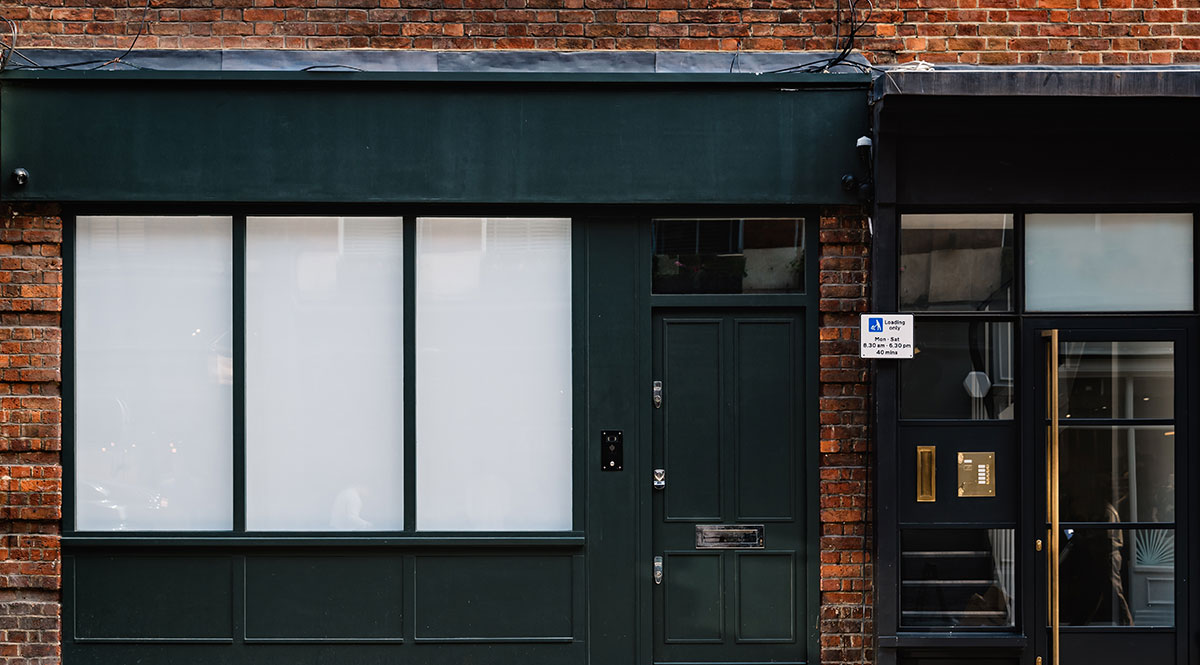
In a metropolis like New York City, for example, over a hundred of these hubs have cropped up across the five boroughs, quietly claiming former retail spots in some of the most foot-trafficked neighborhoods. If you peer through the glass of what used to be a corner deli, you won’t see aisles of chips or a friendly owner slicing turkey. Instead, you will see black vinyl wraps on the windows. Inside, under harsh fluorescent tubes, rows of metal shelving hold pre-packaged goods, and a single worker tosses items into paper bags.
These are “dark stores” and “ghost kitchens”—delivery-only hubs designed entirely to feed the insatiable appetite of on-demand apps.
In restaurant terms, the city is losing its front of house. The lobbies, the dining rooms, the host stands—the spaces where people actually cross paths—are being boarded up. The city is being re-engineered to be nothing but a giant, sterile kitchen. It is a world built not for walking, but for fulfillment.
The Street as a Conveyor Belt
We are witnessing the rise of a silent, highly efficient urbanism.
Historically, the street was a public square, a place where commerce and community collided. You went to buy milk, but you ended up hearing about the neighborhood block association or arguing about the game. The transaction was just an excuse; the human friction was the actual point.
Now, tech logistics platforms view that human friction as a bug to be patched. To them, the street is not a place to exist; it is a conveyor belt. It is just a tube designed to shoot a cardboard container of lukewarm pad thai from a hidden kitchen to your door in under eighteen minutes.
When you replace the local bookstore, the family bakery, and the corner hardware store with windowless warehouses, you slowly alter the soul of a neighborhood. The sidewalk stops being a shared civic space and becomes a high-speed loading zone.
The air is filled with the high-pitched whine of e-bikes, dodging pedestrians to meet an algorithmic deadline. The neighborhood becomes incredibly convenient, but it also becomes deeply lonely. You can get a pint of ice cream delivered to your door in fifteen minutes, but you might go days without speaking to another human being.
We have optimized for the delivery, but lost our shared life.
The Ultimate Dark Store is the AI Prompt Box
This physical flattening of our neighborhoods is the exact mirror image of what we are doing to our digital lives.
The ultimate ghost kitchen isn’t hidden in an industrial park. It is the AI prompt box.
Look at the interface of modern AI tools. It is the pinnacle of clean, minimalist design. There are no cluttered sidebars, no chaotic forums, and no visible machinery. It is just a pristine, empty input bar sitting in a sea of white space. It looks like a digital sanctuary—friction-free, quiet, and perfectly compliant.
But this elegant interface is the ultimate dark store.
Behind that clean, unassuming input bar lies an incredibly messy, resource-heavy, and deeply human back kitchen that you are never supposed to see. Our AI interactions are sustained by a massive infrastructure of data centers and significant energy demands—the literal heat of computation. This system is further refined by a global workforce dedicated to safety and alignment, and built upon a vast foundation of human creative output.
The prompt box presents itself as magic. In reality, it is just a highly optimized delivery app for information, hiding a massive footprint under a sleek, minimalist cover.
And this dynamic is about to deepen. As we push past basic prompts and into agentic AI, we may enter a future where we no longer enter the prompt box anymore. Instead, autonomous digital agents will run silently in the background, making decisions, scheduling our lives, and fetching information before we even ask. The “back of house” will expand.
The Illusion of the King on the Couch
Both our delivery apps and our digital AI tools are selling us the same intoxicating drug: the illusion of absolute, effortless control.
We sit on our couches, lit by the cold blue glow of our screens, playing the role of a modern king. With a few taps of our thumbs, we issue decrees to the universe. We ask for a poke bowl, immediately. We ask for a polite but firm email explaining why we are skipping a meeting. We ask for an image of an astronaut riding a horse in the style of Monet.
And the world bends to our will. The food arrives at the door, dropped off by a courier we barely look at. The email is drafted. The image appears. We feel powerful, highly efficient, and utterly in control.
But this kingship is a profound illusion.
In trading away the messiness of real-world interaction, we isolate ourselves in sterile, gilded cages. We have automated the very things that connect us to our surroundings—the struggle of writing a difficult letter, the spontaneous chat with a cashier, the creative block of drawing a blank page, or the physical act of wandering a neighborhood to find lunch.
When we command our apps to do everything for us, we aren’t actually reigning over a kingdom. We are just isolating ourselves.
The next time you feel the urge to summon the world to your screen with a keystroke, try stepping out of the dark kitchen instead. Walk past the blacked-out windows, find the places where the lights are still on, and go look another human being in the eye. The food might take longer, and the conversation might be awkward, but that is precisely the point. That is where we actually live.