
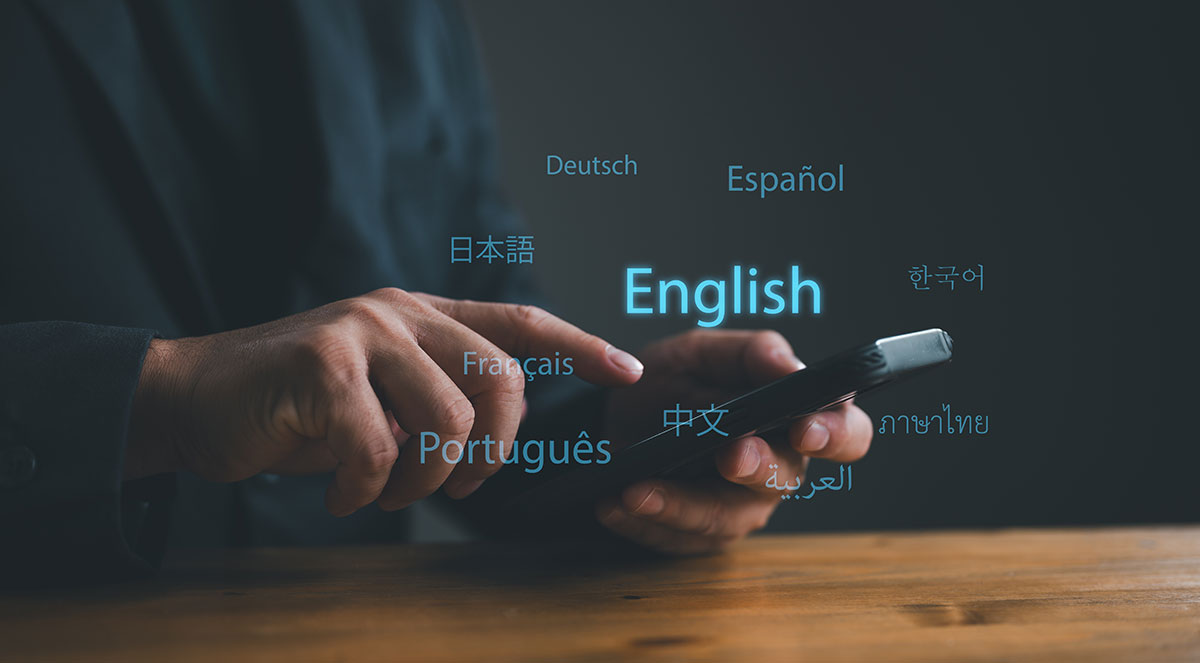
There is a specific, quiet disorientation that comes with being a foreigner in a place where the signs are not for you.
I recently returned from two weeks in Japan—a trip spent navigating the dense, narrow alleys of Kyoto and the overwhelming, multi-level grids of Tokyo. In the beginning, I did what almost everyone does in the Google Translate era: I leaned heavily on the glass rectangle in my pocket. If I couldn’t read a menu, I held my camera over it and watched the Japanese characters dissolve into English. If I needed to ask a shopkeeper for a specific type of paper, I spoke into a microphone and let a synthetic, polite voice do the talking for me.
On paper, it was a triumph of efficiency. I was never truly lost, I was never hungry, and I was never misunderstood. But about halfway through the trip, I realized something unsettling. I was moving through Japan without actually being there.
By removing the difficulty of the language barrier, I had effectively turned one of the most culturally distinct places on Earth into a high-definition theme park. I was seeing the sights, but I wasn’t hearing the soul of the place. I had fallen into what I’ve started calling the “Translation Trap.”
The Myth of the Universal Code
The great promise of our current technology is that language is merely a code for information. We have been taught to believe that a sentence is just a delivery vehicle for a fact, and if we can just swap the parts efficiently, the meaning remains exactly the same.
This is a fundamental mistake. Language isn’t just a code; it is the architecture of culture itself. It is the scaffolding that people use to construct their understanding of time, space, and emotion. When we rely on AI to bridge the gap, we aren’t just translating words. We are sanitizing the way people see the world.
The result is a kind of bland, flattened-out version of reality where every culture is translated into the same middle-of-the-road style. Because these translation models are trained on what is most likely to be said, they naturally gravitate toward the statistical average. They translate for clarity, not for depth. They give us a version of a Japanese thought that has been filtered through a Western lens, which is a bit like looking at a masterpiece through a layer of frosted glass. You see the shapes, but the texture is gone.
The Value of Friction
In some of my previous writing, I’ve argued that as perfection becomes cheap and easy to produce, the things that require real human effort become more valuable. The same logic applies to language.
In the tech world, we are obsessed with making everything seamless. We want the buy-button to work instantly and the interface to disappear. But in the realm of human connection, the struggle is often where the actual relationship begins.
When you try to learn a language, the difficulty—the stuttering, the searching for the right word, the embarrassing moment when you realize you’ve used the wrong greeting—is exactly where the cultural exchange happens. That friction forces you to slow down. It forces you to actually step into the headspace of the person across from you.
When I stopped using the app during my second week in Tokyo and started trying to use my very limited, broken Japanese, the nature of my interactions changed. I wasn’t just requesting data from people anymore; I was engaging in a vulnerable, human moment. The simple act of saying excuse me in a way that respected Japanese social norms wasn’t just about the word itself. It was about participating in a complex social contract of humility and space that an app simply cannot simulate.
The Words That Don’t Cross Over
The danger of this automated world is that it treats words that don’t have a direct equivalent as errors to be corrected rather than unique insights to be celebrated. When we let a machine do the work, it picks the closest English word and moves on, but in that gap, we lose the flavor of the human experience.
During my time hiking through the Kiso Valley of Japan, I became fascinated by the concept of komorebi. It is a word that refers to the specific way sunlight filters through the leaves of trees. An app might translate it as sunbeams, but sunbeams is just a description of the weather. Komorebi is an experience; it requires a forest, a specific time of day, and a person there to notice it. It carries an appreciation for the fleeting, dappled beauty of nature that “filtered light” simply cannot convey.
Similarly, consider the word kōyō. In English, we might just say autumn colors or changing leaves. But in Japan, kōyō is a cultural event, a specific seasonal shift that commands attention and reflection. It isn’t just a noun; it’s a shared emotional state.
When we allow an algorithm to pick the most likely word for us, we lose these unique perspectives. We lose the specific emotional colors that only exist in certain parts of the world. If we continue to outsource our communication to these automated models, we risk a future where we all understand the words, but none of us truly understand the meaning behind them. We will live in a world where information moves fast, but empathy moves very slowly.
Staying Mentally Sharp
There is also a deeper, more personal cost to this: we are letting our mental muscles go soft. As I’ve written before regarding cognitive sustainability, when we offload our thinking to machines, we bypass the mental work required to keep our brains healthy.
Learning a language is perhaps the ultimate mental workout. It reconfigures the brain, creating new ways to think and feel. It forces us to realize that our way of seeing the world is just one of many possible versions. By bypassing this struggle with a translation app, we aren’t saving time. We are giving away our ability to adapt. We are choosing to be tourists in our own lives, forever hovering on the surface of things.
Choosing the Hard Way
I am not suggesting we throw away our phones. My bucket-list trip through Japan would not have been possible without a phone translating subway maps at every turn of the way. But they should be treated as a supplement; not a replacement for our own minds.
To learn a language today is a quiet act of rebellion. It is a refusal to accept a bland, standardized version of the world. It is a declaration that some things—like the specific rhythm of a joke or the quiet weight of a sincere apology—are worth the effort of doing things the slow way.
As I sat in a small bar in Shinjuku on my final night, having a quiet nightcap, I watched the bartender interact with the people around me. I didn’t reach for my phone to translate the ambient noise of the room. I just listened. I didn’t know exactly what every sentence meant, but I could feel the shape of the conversation. I could sense the respect in the tone and the shared history in the laughter.
In a world that wants to make everything easy and invisible, I’m starting to think we should choose the seams. I’ll take the stutter and the misunderstanding, because that is the only way to eventually understand anything deeply. The “Translation Trap” is comfortable, but the view from the other side of the struggle is much more interesting.